
LOVATO Electric moves toward energy independence: the new photovoltaic park adjacent to the company headquarters has been inaugurated
The energy transition is no longer just a future prospect, but a concrete responsibility that calls on companies to act promptly, investing in sustainable solutions and reducing emissions. In this context, the construction of LOVATO Electric’s new photovoltaic park represents an important milestone and a strategic choice oriented towards the long term.
The LOVATO SOLAR project was born as a green and non-speculative investment, with the aim of increasing the company’s energy autonomy and generating sustainable value for the company, the region, and future generations. It is not simply a question of producing energy, but of doing so in an ethical, responsible and lasting way, reducing the environmental impact of consumption and fostering integration into the surrounding rural landscape.
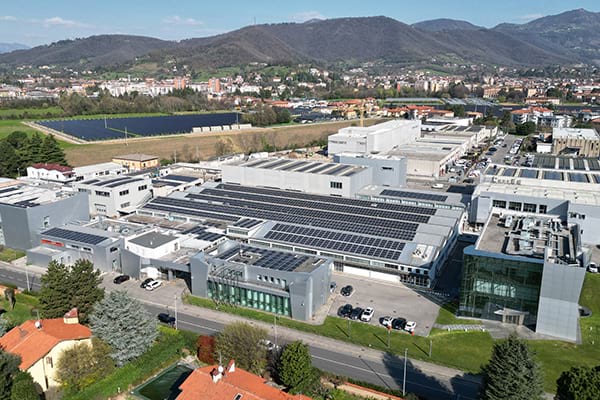
With this initiative, the company is positioned among the first major companies in Bergamo to embark on a concrete path towards energy independence, reducing dependence on external sources and actively contributing to the country’s energy stability.
The park, located in Bergamo a few meters from the company headquarters, extends over an area of 50,000 m² and houses a 3.3 MWp ground-based photovoltaic system, composed of 6,480 510 Wp double-sided modules arranged in 51 rows.
A state-of-the-art infrastructure, where energy production is managed by 10 320 kW inverters and integrated with a 3.2 MWh battery storage system, which allows excess energy to be stored and made available at times of greatest demand and at night.
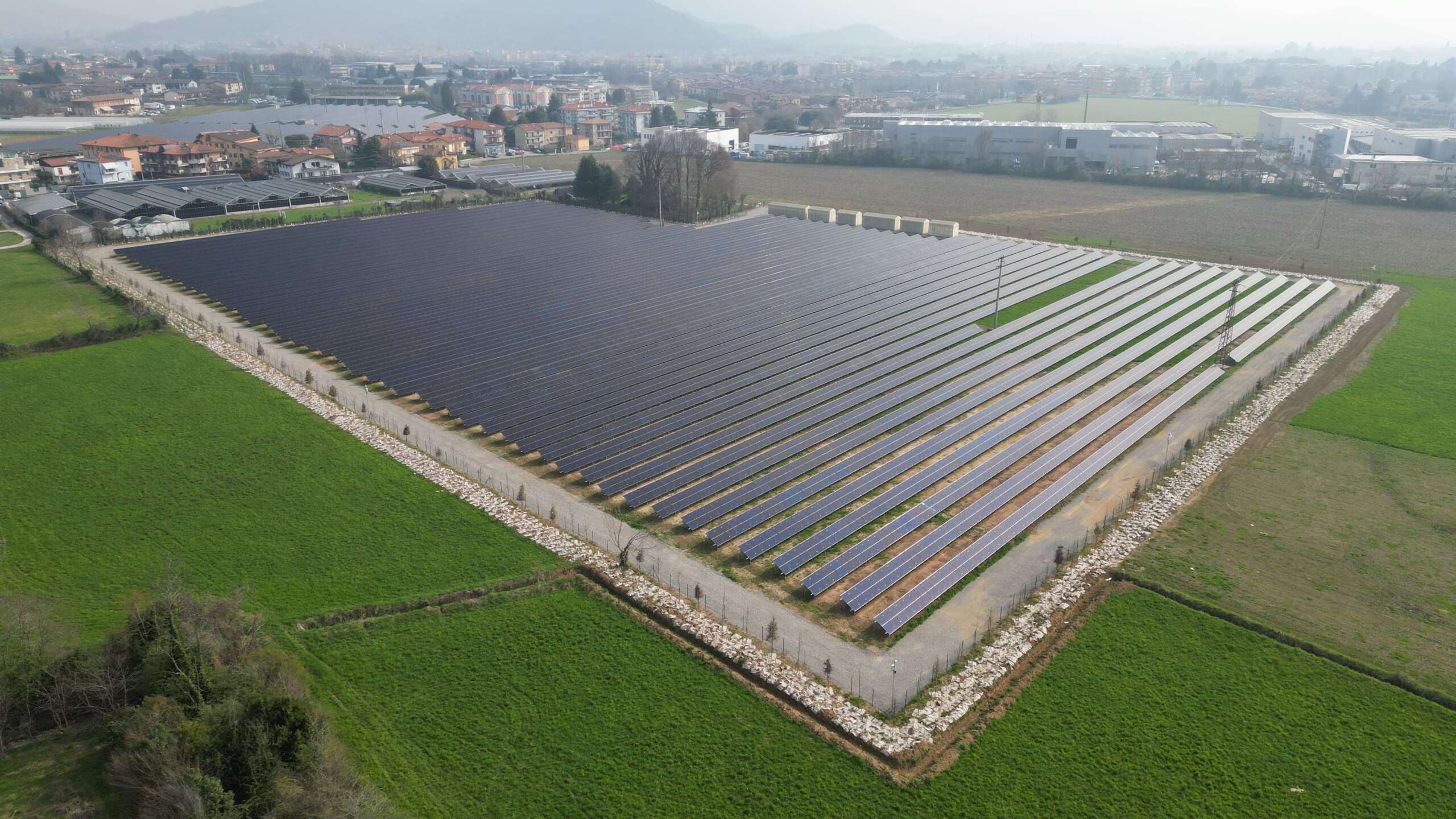
The result is an efficient and flexible system, which will allow the company to self-produce up to ’80% of its energy needs, concretely strengthening the path to energy independence.
A distinctive element of the park is the use of photovoltaic panels made in Europe, a choice that guarantees high quality standards, traceability and attention to the production chain.
Self-produced energy will allow the company to continue producing at competitive costs while remaining in the Bergamo area, especially given that construction of a new 4,200 m² warehouse will be completed in a few months, giving the company the opportunity to double its molding department, which is particularly energy-intensive. This development translates into the creation of new jobs, generating a positive impact on the territory both socially and economically.
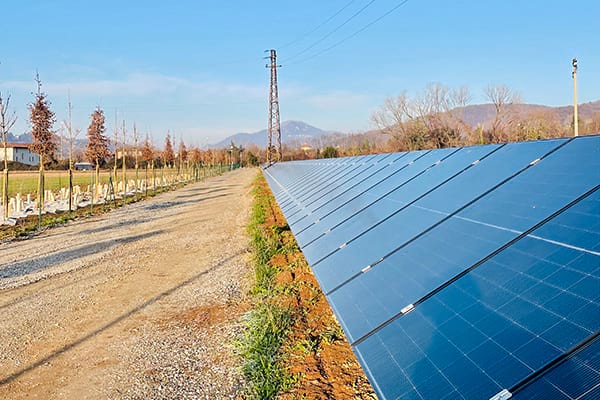
The park integrates with great care into the surrounding environment and the local landscape. The area was conceived as a green space, creating a real “agricultural room”, a green embrace that takes up the typical alignments of the surrounding fields. A strip of native trees and shrubs –maples, hornbeams, hazelnuts and privets– was created around the plant, which connects to the pre-existing wooded scrub. These plant spaces promote biodiversity, offering refuge to small animals, while the fence, raised from the ground, allows the passage of mammals and amphibians, harmoniously integrating into the ecological system.
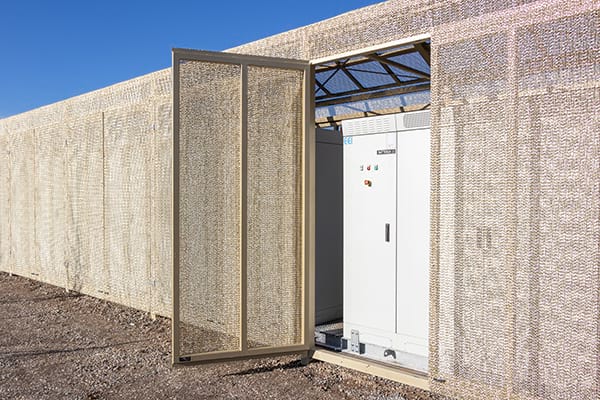
The plant’s technical rooms have also been designed to fit into the context: the metal structures with expanded aluminum sheets recall small farm toll booths with gabled roofs, and the warm hues of the panels recall the colors of ripe wheat, reducing the visual impact.
Compensatory works are also underway: next to the solar park, a wetland with a water basin and rich vegetation will be built, ideal for hosting fauna and birdlife that contribute to the protection of local ecosystems and the enhancement of the landscape, as well as an fruit and vegetable garden that strengthens the connection with the area’s agricultural tradition.
LOVATO SOLAR demonstrates how innovation, sustainability, and responsibility can coexist, transforming an industrial choice into an investment for the future: an intervention that marks a decisive step towards greater energy efficiency, lower emissions, and truly sustainable development, achieved by combining advanced technology, landscape protection, and the valorization of ecological components.

